

Blog
High-Voltage DC-DC Converters for EVs: Technology Trends and Leading Suppliers

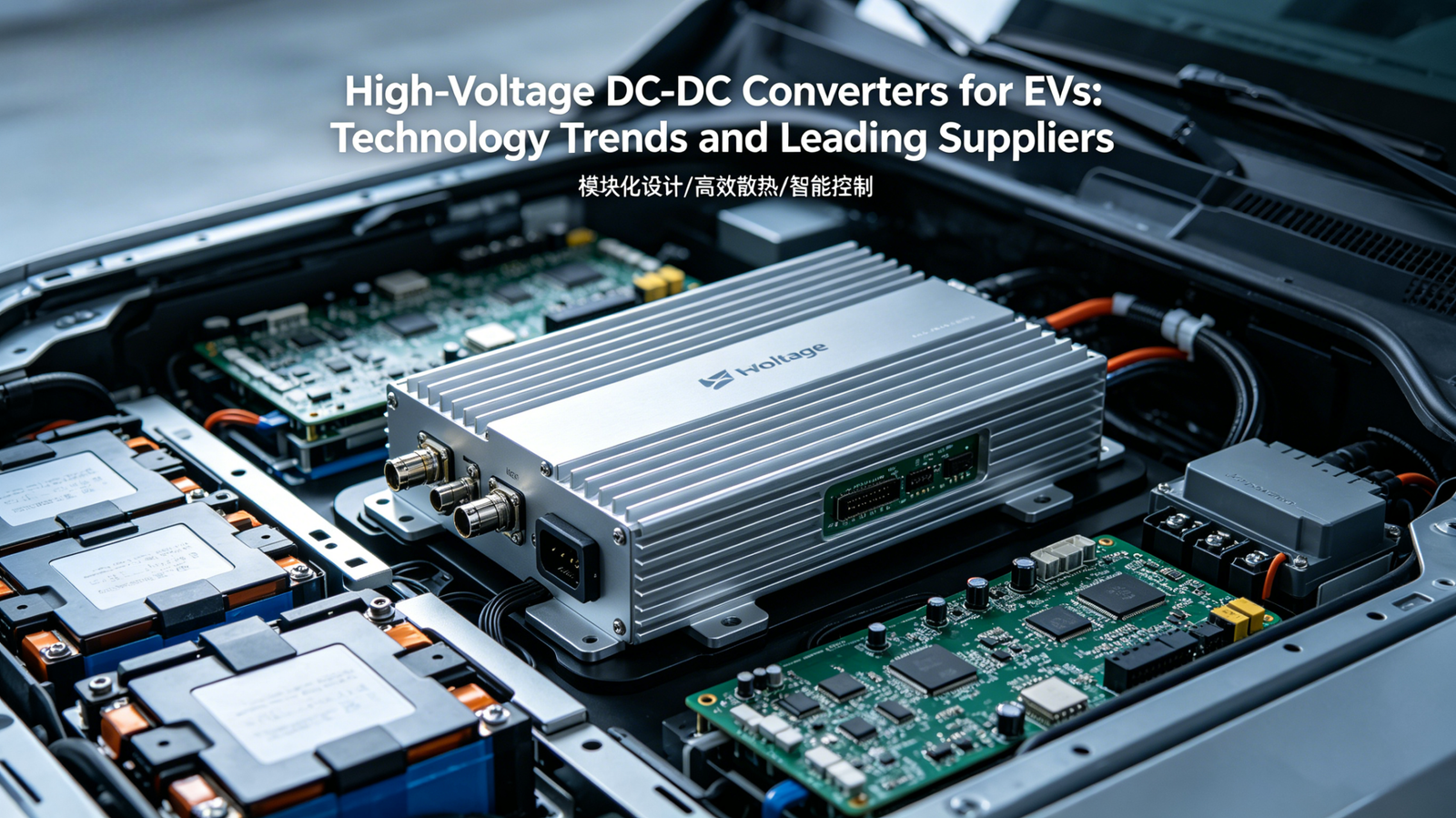
High-Voltage DC-DC Converters for EVs: Technology Trends and Leading Suppliers (2026)
High-Voltage DC-DC Converters for EVs: Technology Trends and Leading Suppliers (2026)
📅 Updated: April 2026 | ⏱ 15 min read | 🔋 EV Power Electronics
High-voltage DC-DC converters are the unsung heroes of modern electric vehicles (EVs). These critical components efficiently step down the high voltage from the main traction battery (typically 400V or 800V) to lower voltages (12V, 24V, 48V) required by auxiliary systems: lights, infotainment, wipers, sensors, and the traditional 12V battery. As the automotive industry accelerates toward electrification, the demand for more efficient, compact, and reliable high-voltage DC-DC converters for EVs is skyrocketing.
📊 Market Snapshot (2026): The automotive DC-DC converter market is projected to grow from USD 3.28 billion in 2025 to USD 8.88 billion by 2031, registering a robust CAGR of 18.04%[reference:0]. Another forecast suggests an even more aggressive trajectory—from USD 1.18 billion in 2025 to USD 3.82 billion in 2030 at a 28.4% CAGR[reference:1]. By 2032, some estimates place the market as high as USD 52.11 billion[reference:2]. This explosive growth is driven by rapid electrification, the shift to 48V mild-hybrid architectures, and the transition from 400V to 800V traction batteries[reference:3].
1. The Evolving Role of DC-DC Converters in EVs
In an electric vehicle, the DC-DC converter serves as the bridge between the high-voltage battery and the low-voltage electrical system. Unlike internal combustion engine vehicles, which use an alternator to power the 12V network, EVs rely entirely on the DC-DC converter to perform this function. It draws power from the main traction battery and steps it down to charge the auxiliary battery and run all 12V systems[reference:4]. Additionally, it facilitates efficient energy transfer during regenerative braking, capturing energy that would otherwise be lost[reference:5]. As EV platforms evolve, the demands on these converters have intensified, requiring higher power density, lower weight, and greater efficiency to maximize range and reduce thermal management complexity.
2. Key Technology Trends Shaping the Market
2.1. Transition to 800V Architectures
Perhaps the most significant trend in EV powertrain design is the shift from 400V to 800V battery systems. Higher voltage allows OEMs to reduce current for the same power output (P = I × V), which in turn reduces resistive losses (I²R) and allows for thinner, lighter cabling—contributing directly to improved vehicle efficiency and weight reduction[reference:6]. In 2022, only 13 production passenger car models in China featured 800-1000V architectures; by mid-2025, that number reached 70, and 800V vehicle sales are projected to surpass 7.45 million units by 2030[reference:7]. This transition has profound implications for DC-DC converters, which must now handle higher input voltages while maintaining or improving efficiency and isolation safety[reference:8].
2.2. Wide Bandgap Semiconductors: SiC and GaN
Silicon carbide (SiC) and gallium nitride (GaN) are revolutionizing power electronics for EVs. These wide bandgap (WBG) semiconductors offer superior properties: higher breakdown voltage, higher thermal conductivity, and lower switching losses compared to conventional silicon. SiC devices are particularly well-suited for high-voltage, high-power applications like main traction inverters and high-voltage DC-DC converters for 800V platforms[reference:9]. In China alone, SiC device application rates in onboard DC-DC converters have reached 50%, with conversion efficiencies exceeding 95%[reference:10]. GaN, with its extremely high switching frequency capabilities, is gaining traction in DC-DC converters and onboard chargers (OBCs), enabling smaller, lighter designs. At PCIM 2025, Texas Instruments demonstrated a 3.5 kW bidirectional GaN-based DC-DC converter supporting 400V and 800V battery architectures, achieving a 30% reduction in board area over silicon equivalents[reference:11]. Navitas also achieved automotive qualification for its high-power GaNSafe ICs, unlocking unprecedented power density and efficiency for high-voltage DC-DC converter applications[reference:12].
💡 Did you know? The combination of 800V architectures and SiC devices can boost overall system efficiency by 5-10%, translating directly to extended driving range.
2.3. Bidirectional Converters and V2G Integration
Vehicle-to-Grid (V2G) and Vehicle-to-Load (V2L) functionality is rapidly moving from concept to reality. Bidirectional DC-DC converters are essential enablers, allowing energy to flow in both directions—from the grid to charge the EV, and from the EV battery back to the grid or to power external loads. This turns parked EVs into mobile energy storage assets, capable of supporting grid stability, powering homes during outages, or supplying electricity for tools and camping equipment[reference:13]. The adoption of bidirectional topologies that manage energy flow between high- and low-voltage domains is now forming the design baseline for next-generation electric platforms[reference:14].
2.4. Thermal Management and Power Density
As converters handle higher power levels (now exceeding several kilowatts), thermal management becomes a critical design challenge. Traditional aluminum heatsinks are often insufficient, particularly in confined spaces. Advanced solutions include liquid-cooled units and integration with the vehicle’s existing thermal management system. Bel Fuse, for example, introduced liquid-cooled 4 kW units to address junction-temperature constraints in heavy-duty applications[reference:15]. The adoption of GaN and SiC, while more efficient, still requires advanced cooling plates or dielectric oil channels at high switching frequencies (e.g., 400 kHz)[reference:16].
2.5. Integration and Modularization
To reduce system complexity, size, and cost, OEMs and suppliers are increasingly integrating the DC-DC converter with other power electronics components. Multi-in-one integrated solutions (combining DC-DC converter, OBC, and PDU—power distribution unit) now account for over 70% of new designs, reducing volume by up to 30% and cost by 20%[reference:17]. This integration simplifies vehicle assembly, improves reliability, and reduces wiring harness complexity.
3. Leading Suppliers and Competitive Landscape
The EV high-voltage DC-DC converter market is characterized by a mix of global Tier 1 suppliers, specialized semiconductor companies, and rapidly growing local players, particularly in China.
Bosch
A global Tier 1 powerhouse with comprehensive high-voltage power electronics portfolios, including DC-DC converters for 400V and 800V platforms[reference:18].
Continental AG
Major player in automotive DC-DC converters, offering solutions for mild-hybrid and full-EV architectures, with strong R&D in integrated power electronics[reference:19][reference:20].
Denso Corporation
Leading Japanese supplier with advanced power module technology and high-reliability DC-DC converters for hybrid and electric vehicles[reference:21][reference:22].
Valeo
Strong presence in both high-voltage and low-voltage power conversion systems, with a focus on integration and thermal management[reference:23][reference:24].
联合汽车电子 (UAES)
Bosch joint venture; leading high-voltage power electronics player in China. Offers high-voltage DC-DC converters for 400V/800V platforms achieving 97% efficiency, serving Mercedes, BMW, and Audi[reference:25].
欣锐科技 (Shinry Technologies)
Pioneer in SiC technology for onboard power supplies. SiC DC-DC converters support 800V platforms with peak power up to 200kW, serving BYD, Xpeng, and Toyota[reference:26].
Vicor Corporation
Specialist in high-density power modules; known for its innovative Sine Amplitude Converter (SAC) topology achieving up to 99% efficiency for 800V to 48V conversion[reference:27][reference:28].
Infineon Technologies
Leading semiconductor supplier providing SiC and GaN devices critical for next-generation DC-DC converters. Supplies power semiconductors to most major automotive OEMs and Tier 1s[reference:29][reference:30].
威迈斯 (VMAX)
Among the global top 3 in market share. SiC DC-DC converters support 4C fast charging, with peak current up to 600A, serving Xpeng, NIO, and GAC Aion[reference:31].
汇川技术 (Inovance Technology)
Leader in electric drive systems. Multi-in-one integrated DC-DC solutions combine DC-DC converter + OBC + PDU, reducing volume by 30% while supporting wide temperature range (-40°C to 105°C)[reference:32].
Other notable global suppliers include TDK-Lambda, Murata, Texas Instruments, ON Semiconductor, Analog Devices, and RECOM[reference:33]. The competitive landscape is also seeing strategic acquisitions, such as Micross Components acquiring Infineon’s HiRel DC-DC converter business, aimed at enhancing high-reliability power management capabilities[reference:34].
4. Future Outlook and Challenges
Looking ahead, the EV DC-DC converter market will continue to be driven by several factors:
- Increasing BEV/PHEV production: As automakers ramp up EV production, the volume demand for DC-DC converters will multiply. BYD’s surge past Tesla in 2024 revenue underscores how production scale directly multiplies converter demand across all vehicle price tiers[reference:35].
- Global 48V mild-hybrid mandates: CO₂ compliance deadlines in Europe and tightening fuel economy targets in North America are pushing OEMs to deploy 48V systems. Eaton, for instance, launched 48V DC-DC converters built to withstand high temperatures, shock, and vibration, meeting demand from manufacturers implementing dual-voltage architectures[reference:36][reference:37].
- Artificial intelligence (AI) and digital twin technologies: These tools are increasingly used for real-time performance optimization and predictive maintenance of power conversion systems[reference:38].
- Advanced topologies: Researchers are exploring interleaved, coupled-inductor, switched-capacitor, multiport, and resonant converters, each suited for different application requirements[reference:39].
However, challenges remain. Thermal management of converters exceeding a few kilowatts continues to push the limits of traditional cooling solutions[reference:40]. The transition to 800V systems introduces significant design hurdles in packaging, thermal management, system safety, and transient response. Ensuring the safe and efficient conversion from 800V high-voltage (HV) battery power to 48V safety extra-low voltage (SELV) power requires fundamental architectural shifts[reference:41]. Additionally, automotive-grade passive-component shortages and the still-relatively high cost of SiC and GaN devices present ongoing headwinds[reference:42].
🔮 What’s Next? The next frontier includes ultrawide output range LLC resonant DC-DC converters for fast-charging applications, single-stage bidirectional topologies (using GaN) that eliminate bulky capacitors and input inductors, and the widespread adoption of 1700V-rated switcher ICs that enable simplified manufacturing for 800V systems while reducing BOM count by up to 50%[reference:43][reference:44].
5. Conclusion
High-voltage DC-DC converters are a cornerstone of EV powertrain technology, and their importance will only grow as electrification accelerates. The industry is undergoing a profound transformation driven by the adoption of 800V architectures, the deployment of SiC and GaN wide bandgap semiconductors, and the emergence of bidirectional topologies enabling V2G applications. The market is highly competitive, with global Tier 1 suppliers, semiconductor specialists, and agile local players all vying for position. For engineers and decision-makers, staying ahead means embracing higher efficiency, higher power density, and greater integration. As EV battery costs continue to decline and range anxiety fades, the unsung DC-DC converter will be critical in delivering the performance and reliability that drivers expect. © 2026 Power Electronics Guide – Your resource for EV high-voltage DC-DC converter technology, trends, and supplier analysis.